2026-09-14 ·
Sorting Storm Debris After Gulf Coast Weather Events in Mobile
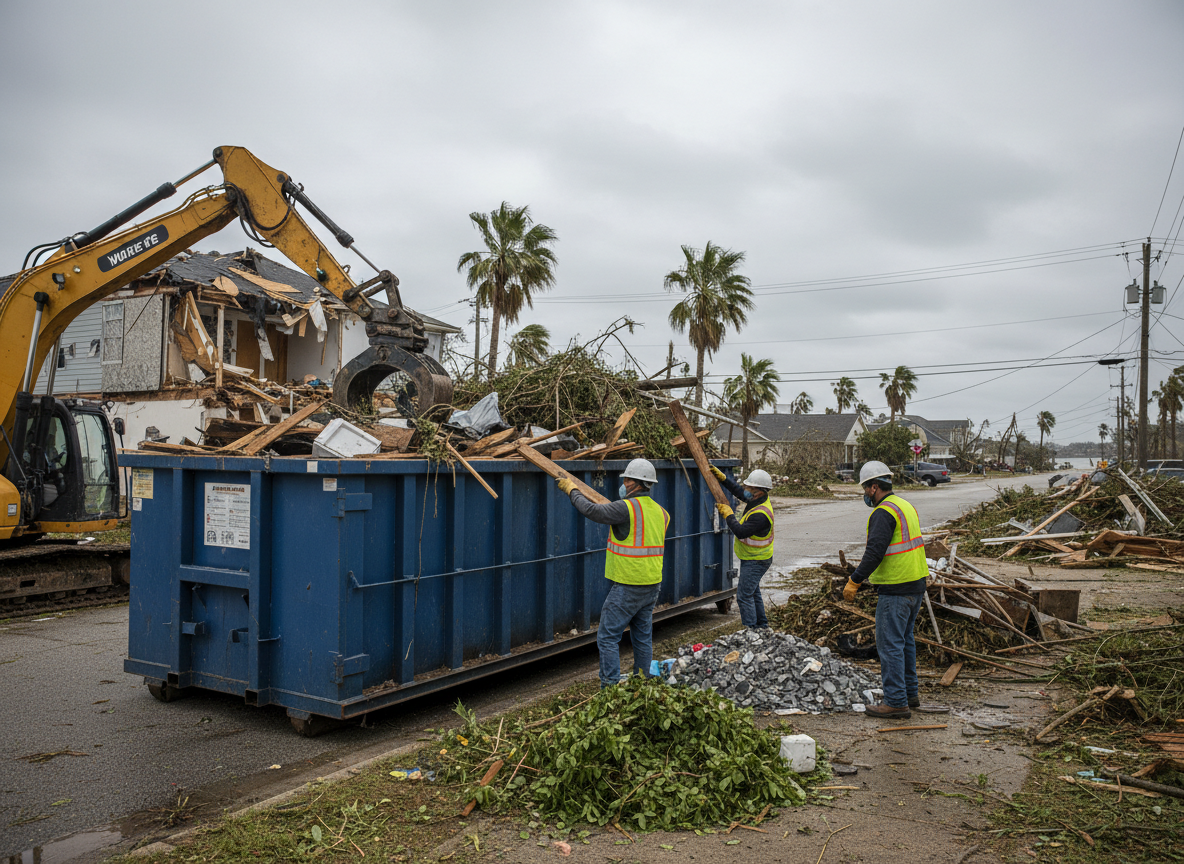
After Gulf Coast weather events hit Mobile, sort storm debris into four main categories—vegetative matter, construction materials, household items, and hazardous waste—before loading any roll off rental. This approach prevents contamination that can double handling time at transfer stations serving Mobile County. Residents in areas such as Spring Hill and Midtown often face mixed loads from fallen live oaks and damaged older roofs, while flooding near Downtown Mobile adds waterlogged drywall and insulation. Starting with clear separation on the ground reduces the number of trips needed and keeps costs predictable when using a 20-yard or 30-yard container.
Identifying Debris Categories After Storms
Begin by walking the property and grouping items by material type. Vegetative debris includes tree limbs, palm fronds, and leaves common after high winds in West Mobile and Spring Hill. Construction debris covers shingles, siding, and lumber from homes built before 1980 that line many Midtown streets. Household items range from soaked furniture to appliances displaced by storm surge near Dauphin Island. Keep hazardous items such as paint cans, batteries, and treated lumber separate to avoid rejection at local facilities. This initial sort usually takes one to two hours per residential lot when done before the container arrives.
Handling Vegetative Waste from Gulf Storms
Vegetative debris from Mobile's frequent storms must stay free of dirt clods and foreign objects to qualify for yard waste processing. In neighborhoods like Spring Hill, large oak limbs often measure 6–12 inches in diameter and require chainsaw sectioning to fit container height limits. Place these branches at the bottom of the load so lighter leaves do not blow out during transport. Because the local climate stays humid year-round, wet piles begin to mold within 48 hours, so schedule pickup within one day of collection. Using a dedicated yard waste dumpster rental keeps this material out of mixed construction loads and lowers overall tonnage fees.
Managing Construction and Roofing Debris
Roofing and structural debris from older housing stock in Midtown and Downtown Mobile frequently mixes nails, insulation, and underlayment. Separate metal flashing and gutters into their own pile to prevent punctures in the container liner. Limit the load to 4–6 inches of compacted depth per layer so the hauler can tarp securely before leaving for the landfill. Local rules require documentation for certain volumes of construction waste; review the county guidelines linked in Local Rules for Disposing of Construction Materials in Mobile County before loading. A roll off dumpster rental sized at 20 yards typically handles one average roof replacement plus minor interior repairs common after wind events.
Practical Steps for On-Site Sorting
Stage three tarps or bins on the driveway before the container is delivered. Label each for vegetative, construction, and household streams. Work from the farthest point of the yard inward so debris does not get tracked across clean areas. In Mobile County, where soil stays saturated after heavy rain, place plywood sheets under the container to prevent sinking on clay-heavy lots. Once sorted, call for pickup; 24/7 availability means containers can be swapped even on weekends when storm cleanup peaks. This method keeps loads compliant and avoids extra charges that arise when mixed debris must be hand-sorted at the facility.